Business

Setting Up a Business in Lithuania: Benefits, Steps, and Expert Tips

Written by Deepak Bhagat, In
Business,
Updated On

December 21st, 2024

,
13 Views

Establishing a company in Lithuania offers entrepreneurs a strategic gateway to the European Union’s expansive market. With its favourable business environment, competitive tax rates, and robust support for innovation, Lithuania stands out as an ideal destination for business formation.

This article provides a comprehensive guide on the company registration process in Lithuania, highlighting its advantages and the services offered by Eesti Firma to facilitate your business journey. Learn more at eestifirma.ee

Why Choose Lithuania for Company Registration?

Lithuania’s strategic location in Northern Europe provides seamless access to the EU’s single market and the Baltic, Scandinavian, and Eastern European countries. This central positioning makes it an attractive hub for businesses expanding across Europe. The country’s commitment to fostering a business-friendly environment is evident in its competitive tax policies and support for innovation.

Competitive Tax Environment

Lithuania offers one of the most favourable tax regimes in Europe. The standard corporate tax rate is 15%, with small enterprises with annual revenues up to €300,000 and employing up to 10 staff eligible for a reduced rate of 5%. Additionally, new companies can benefit from a 0% corporate tax rate during their first year of operation, significantly easing the initial financial burden.

Support for Innovation and Startups

The Lithuanian government actively supports innovation, particularly in fintech and information technology. The country has developed a robust infrastructure for startups and tech companies, offering various incentives and support programs to foster growth and development. This commitment has positioned Lithuania as a leader in fintech and innovation within the European Union.

Steps to Register a Company in Lithuania

Registering a company in Lithuania is a straightforward process designed to minimize bureaucratic hurdles and facilitate business operations. The procedure can be completed in person or remotely through a power of attorney.

1. Choose the Legal Form

The first step is to select the appropriate legal form for your business. The most common type is the Limited Liability Company (Uždaroji akcinė bendrovė, UAB), which offers limited liability to its shareholders and requires a minimum share capital of €2,500.

2. Prepare the Necessary Documentation

Essential documents include the company’s articles of association, information about the shareholders and directors, and proof of the registered office address. These documents must be prepared in Lithuanian and notarized.

3. Open a Bank Account

A corporate bank account must be opened to deposit the initial share capital. This account will also be used for the company’s financial transactions.

4. Register with the Register of Legal Entities

Submit all required documents to the Lithuanian Register of Legal Entities. The company will receive a registration certificate and a unique company code upon approval.

5. Register for Taxes

The final step involves registering with the State Tax Inspectorate and, if applicable, the Social Security Fund Board. This ensures compliance with tax and social security obligations.

Remote Company Registration

For entrepreneurs unable to be physically present in Lithuania, the registration process can be conducted remotely through a notarized power of attorney. This option provides flexibility and convenience, allowing business owners to establish their companies without travelling to Lithuania.

Advantages of Doing Business in Lithuania

Beyond its favourable tax environment and support for innovation, Lithuania offers several other advantages:

  • Skilled Workforce: The country boasts a highly educated and multilingual workforce, providing a valuable asset for businesses across various sectors.
  • Developed Infrastructure: Lithuania has a well-developed infrastructure, including modern transportation networks and advanced IT capabilities, facilitating efficient business operations.
  • Government Support: The Lithuanian government actively supports foreign investment, offering various incentives and assistance programs to attract and retain businesses.

About Eesti Firma

Eesti Firma is your reliable partner in establishing and growing your business in Lithuania. With over a decade of experience, our team of consultants, lawyers, and accountants provides comprehensive support at every stage of the company formation process.

We offer a range of services, including:

  • Company Registration: Preparing and submitting all necessary documents to ensure a smooth and efficient registration process.
  • Legal Services: Providing expert legal advice to ensure compliance with Lithuanian laws and regulations.
  • Accounting Services: We offer professional accounting and tax services to help you manage your financial obligations effectively.
  • Corporate Support: Assisting with opening bank accounts, obtaining necessary licenses, and providing ongoing support to facilitate business operations.

By choosing Eesti Firma, you gain a trusted partner dedicated to making your business journey in Lithuania as seamless and successful as possible.

In conclusion, registering a company in Lithuania presents a strategic opportunity to access the European Union market, benefit from a favourable tax environment, and leverage a supportive ecosystem for innovation and business growth. With the guidance and expertise of Eesti Firma, you can navigate the registration process with confidence and set the foundation for your business’s success in Europe.

The Role of Fax Machines in Business Communication

Written by Moli Mishra, In
Business,
WordPress,
Published On

December 12, 2024

,
15 Views

In an era where instant messaging and emails seem to dominate business communications, one may wonder about the relevance of seemingly antiquated technologies like fax machines. Yet, surprisingly, the fax machine has persisted as a stalwart companion in many sectors, illustrating resiliency and utility that newer technologies have not fully supplanted. The reasons for this enduring presence are multifaceted, ranging from legal requirements to ingrained business practices. Below, we delve deeper into why fax technology still holds an essential role in professional communication today.

Understanding the Endurance of Fax Machines in Modern Business

Fax MachinesFax Machines

The steadfastness of fax technology in the contemporary business landscape can be attributed largely to its simplicity and reliability. Throughout decades, fax machines have allowed organizations to send and receive important documents rapidly without the complexities or security worries inherent in other forms of electronic transmission. The tactile nature of faxing, where physical documents are scanned and reproduced almost instantaneously on the other end, provides trust in the transference of unaltered information.

Moreover, the legacy of fax machines is entrenched in certain industries, such as law and healthcare, where original signatures and confidential materials are frequently exchanged. In these sectors, the legal recognition of faxed documents as equivalent to original signatures further cements their necessity. Also, fax technology has stayed current by often incorporating digital enhancements, thus bridging traditional methods with modern expectations.

The Impact of Fax on Security and Compliance in Communication

Fax machines often feature prominently in discussions of secure communications due to their direct line of transmission. The technology operates on the public switched telephone network (PSTN), deterring many cyber-attacks common on internet-based platforms. For sensitive information, this means a lower risk of interception by unauthorized parties during transit.

Compliance with legal and regulatory standards further solidifies the role of fax machines in business communications. Certain laws and regulations specify that businesses must use secure methods when transmitting private information. Fax machines are frequently deemed compliance-friendly because the transmission is harder to intercept than many forms of digital communication, assuring a higher level of privacy and security.

The Health Insurance Portability and Accountability Act (HIPAA) in the United States is an excellent example of such regulations, setting stringent guidelines for protecting sensitive patient data. Due to these compliance requirements, medical facilities often utilize faxing over email, trusting its security protocols over more modern yet potentially vulnerable digital methods. This precaution is critical, as data exposure could have profound privacy implications.

Exploring Fax Technology and Its Integration With Email Systems

Technological evolution has not bypassed fax machines, which have adapted to the digital environment through integration with email systems. This hybrid approach capitalizes on the familiarity and dependability of fax while leveraging email’s global reach and convenience. Users can now send and receive faxes directly from their email accounts, which translates to improved efficiency and a more streamlined workflow.

The merger of fax and email systems has given birth to online fax services, where users can manage their faxing needs without the physical machine. This digital transformation has allowed businesses to maintain the advantages of faxing such as security, legality, and reliability—while enjoying a paperless office’s environmental and space-saving benefits. These online services preserve and extend the traditional fax’s future into the digital realm.

One of the most significant advantages of online faxing is its accessibility. Any device capable of accessing email can send and receive faxes, thus eliminating the need for a physical fax machine and dedicated phone line. The convenience of this approach is particularly evident for remote workers and businesses that operate across multiple locations.

The Advantages of Fax Machines for Reliable Document Transmission

Fax machines boast a reputation for reliably and efficiently delivering documents. The technology is innately resilient to many of the pitfalls that can affect digital communications, such as server downtime or email spam filters, which can impede timely delivery. In the world of business, where time is often of the essence, this reliability is invaluable.

In addition, the direct nature of fax transmission ensures that documents reach their intended recipient without the convolutions that sometimes characterize email exchanges. The immediacy with which a recipient can confirm receipt and review a document cannot be understated, particularly in operational scenarios that demand swift action and response.

Overall, fax technology’s resilience in the face of rapid digital evolution is a testament to its intrinsic value. As businesses worldwide continue to leverage traditional and innovative means of communication, the fax machine’s legacy remains secure, reflecting an adaptability that ensures its continued relevance in the corporate world.

Revolutionize Your Business Enterprise With Smarter Connectivity 

Written by Ramsay, In
Business,
Published On

January 16, 2025

,
18 Views

In a world where businesses rely heavily on technology, smarter connectivity has become the cornerstone of success. From improving communication to streamlining operations, intelligent connectivity can take your business to the next level. It’s no longer just about staying online or maintaining essential communication—creating a seamless network that empowers your team, engages your customers, and drives innovation.

How To Revolutionize Your Business Enterprise With Smarter Connectivity

If you’re looking to take your business to new heights, here are a few tips for revolutionizing your business enterprise with smart connectivity:

Invest in Enterprise Internet Solutions

Your connectivity strategy should start with having the proper internet infrastructure. Standard internet services often fail to meet the demands of modern operations. As such, you need to invest in enterprise internet solutions.

These solutions provide faster, more reliable, and secure connections to support your business needs. You gain consistent speeds, lower delays, and the ability to scale as your business grows. This means fewer interruptions during video meetings, smoother uploads to cloud platforms, and quicker access to essential tools and data.

In addition, enterprise internet solutions offer added benefits like better customer support, quicker repairs, and stronger cybersecurity. These features keep your operations running smoothly and protect your business from threats.

Leverage Cloud-Based Solutions

Cloud-Based SolutionsCloud-Based Solutions

Cloud computing will help you stay connected and productive wherever you are. It gives you access to crucial data, tools, and applications from any location, keeping your team in sync and efficient. This makes working together easier, sharing updates and completing tasks without delays.

Switching to cloud-based systems removes the need for expensive on-site servers. You can share files instantly and ensure everyone can access the latest real-time data. This improves your business’s operations and makes growing without worrying about outdated systems easier.

Cloud solutions also provide the flexibility to grow with your business. Cloud-based tools can scale to meet your needs as your team expands or operations evolve. This flexibility improves your daily operations and allows your business to handle future challenges easily.

Enhance Collaboration With Unified Communication Tools

Good communication is essential for intelligent connectivity. Unified communication tools combine messaging, video calls, file sharing, and task management into one platform. This makes it easier for your team to stay connected and work together, regardless of their location.

Tools like Zoom, Microsoft Teams, and Asana ensure your team can share updates, manage projects, and stay organized. Whether your team works remotely, in the office, or both, having everything in one place improves efficiency and strengthens teamwork.

For example, a shared platform lets everyone access duplicate files and updates in real time. This makes collaboration possible and ensures everyone stays on track with tasks and deadlines. It also reduces the need for constant back-and-forth communication, freeing up more time for productive work.

Prioritize Cybersecurity

CybersecurityCybersecurity

As your business becomes more connected, the risk of cyber threats grows. To keep your operations secure, you need a strong defence in place. Start with tools like firewalls, antivirus software, and encryption to protect your systems from attacks. Regular software updates are also essential because they fix vulnerabilities that hackers might exploit.

In addition to securing your systems, controlling access to sensitive information is critical to protecting your business. Multi-factor authentication (MFA) can add an extra layer of security by requiring more than just a password to log in.

You should also consider using virtual private networks (VPNs). These tools can help secure connections for team members working remotely or from different locations. They make it harder for unauthorized users to gain access and protect your data, even when your team is on the move.

Educating your team is just as crucial when it comes to data security. Many breaches happen because of simple mistakes, like clicking on phishing emails or using weak passwords. Regular cybersecurity training can help your team recognize threats and respond correctly. This will help reduce risks and build trust with customers and partners who value the safety of their information.

Embrace the Internet of Things

The Internet of Things (IoT) transforms how businesses work by connecting devices to gather and share data. IoT devices, like smart sensors and automated systems, will help you collect real-time information to improve your processes.

When you integrate IoT into your business, you can achieve greater efficiency and reduce downtime. Smart thermostats, for example, can lower energy costs, while sensors can track inventory levels more accurately. These applications make your business more agile and responsive.

Beyond efficiency, IoT opens up opportunities for better workflows and better decision-making. Real-time data from connected devices allows you to identify patterns, predict potential issues, and make informed choices. This creates a more proactive, data-driven approach to managing your operations and keeping your business ahead of the competition.

Focus on Customer-Centric Connectivity

Connectivity isn’t just about improving how your team works—it’s also about enhancing the customer experience. Tools like chatbots, social media, and customer relationship management (CRM) platforms can help you stay connected with your customers. These tools allow you to answer questions quickly, provide personalized recommendations, and strengthen relationships.

For example, a CRM system can centralize all customer interactions in one place. This will make it easier for your team to track customer preferences, respond consistently, and deliver a tailored experience. Whether addressing concerns or following up on orders, these tools ensure customers feel valued and understood.

When you put your customers first, you build trust and loyalty. Responding promptly and offering personalized solutions show customers you care about their needs. Over time, this creates stronger bonds and increases the chances of repeat business.

Conclusion

The journey to smart connectivity isn’t just about adopting new technology—it’s about transforming how your business operates in the current digital landscape. Note that each step toward enhancing connectivity strengthens your business’s foundation. It streamlines your operations, boosts collaborations, improves customer relationships, and secures your data. So, implement these strategies today to create a more innovative, connected enterprise ready for the future.

The Role Of Business Applications In Modern Enterprise Success

Written by Deepak Bhagat, In
Business,
Published On

January 17, 2025

,
10 Views

Business applications are important tools that help companies work better and stay competitive. These software solutions make daily tasks easier, improve decision-making, and help teams work well together. As companies grow and adapt, they use these applications to increase productivity and support their goals. With the right tools, businesses can solve challenges and find new opportunities. Understanding how business applications support success shows why they are valuable for modern enterprises.

The Role Of Business Applications In Modern Enterprise Success

Business ApplicationsBusiness Applications

Making Daily Operations Smoother

A key role of business applications is to make operations more efficient. Manual tasks often slow down workflows and lead to mistakes. Automation tools help businesses handle routine tasks faster, letting employees focus on more important work. For example, enterprise resource planning (ERP) systems bring together functions like inventory tracking, finance, and supply chain management in one system. This reduces duplicate work and keeps data accurate.

Customer relationship management (CRM) software also improves efficiency by helping sales and support teams track customer interactions. Instead of using multiple spreadsheets, employees can view updated customer information in one place. This setup saves time and lowers costs while making work more manageable.

Helping Leaders Make Smart Decisions

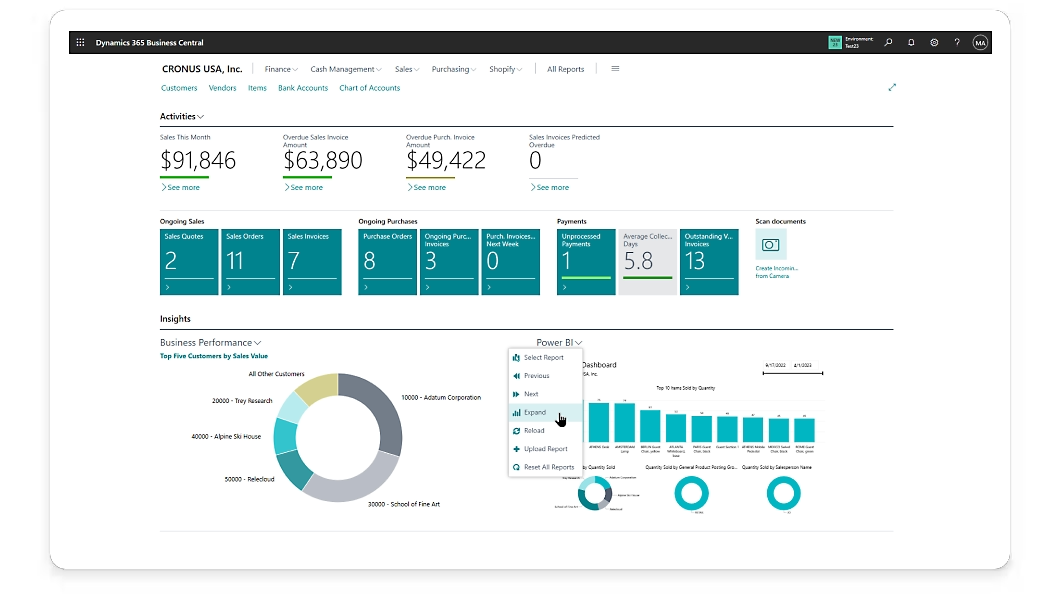
Good decisions come from having clear and accurate information. Business applications collect and organize data to make it easy to understand. Tools like business intelligence (BI) platforms create reports that show trends and performance metrics.

For example, a BI dashboard can show how sales are doing in different regions or highlight customer feedback trends. This helps managers quickly adjust their strategies and stay on track with company goals. Having clear insights helps businesses respond to changes in the market and fix internal issues more efficiently.

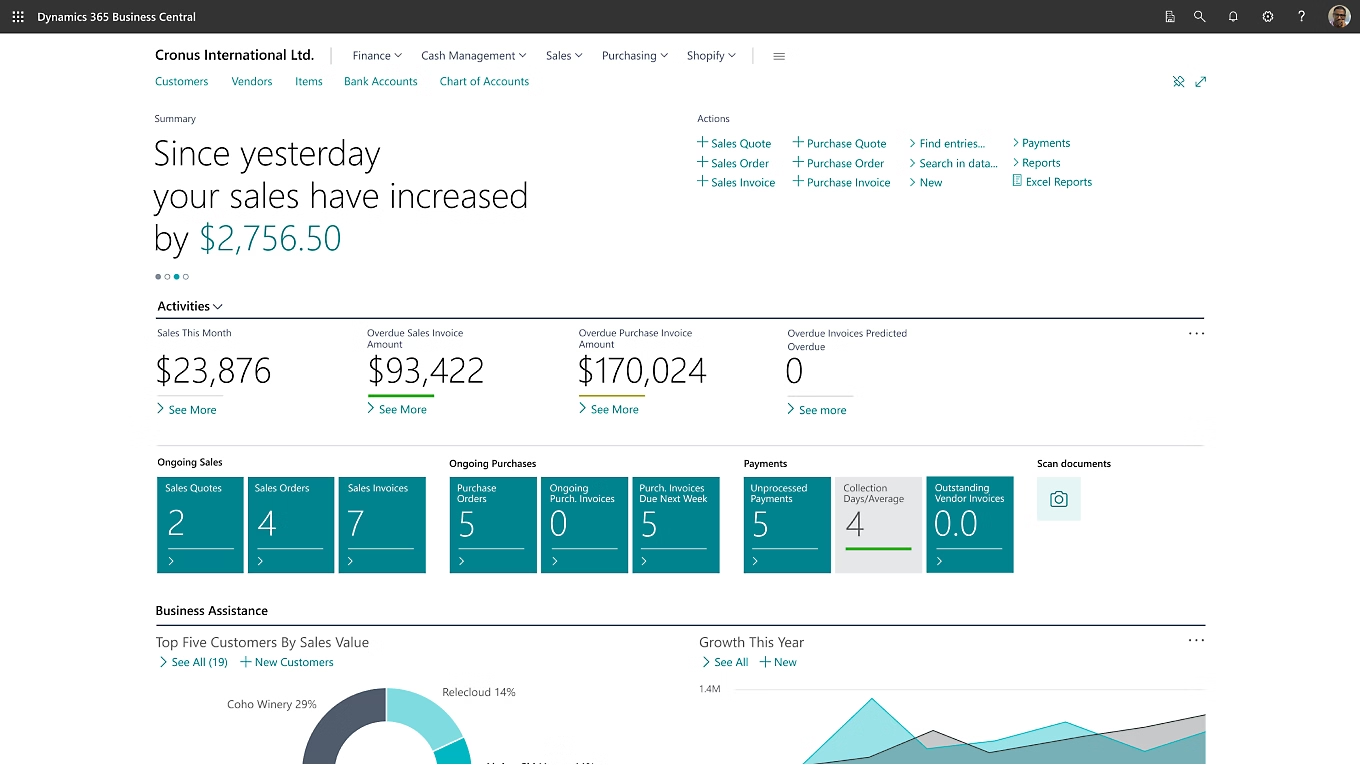
Many companies choose solutions like Microsoft business applications to access detailed reports and tools that simplify analysis. These platforms help companies customize their approach and improve planning.

Improving Team Collaboration

Strong teamwork and communication are important for business success, especially for remote and hybrid teams. Business applications designed for project management and communication help teams work together without delays.

Project management tools let teams assign tasks, track progress, and share schedules. These features make it easier for everyone to stay organized and move toward the same goals. Communication tools, like messaging apps and video call platforms, make it possible for teams to stay connected no matter where they are. Better collaboration prevents misunderstandings and keeps projects running smoothly.

For example, a team preparing for a product launch can use these tools to share updates, adjust timelines, and solve problems quickly, preventing costly delays.

Enhancing Customer Service

Providing great customer service is essential for long-term success. Business applications play a key role in helping companies offer fast and personalized support. CRM systems store detailed customer information, such as purchase history and past communication, so support teams can provide better solutions.

Self-service portals and chatbots also improve the customer experience by helping customers find answers independently. This convenience builds trust and loyalty because customers appreciate fast and helpful service.

Encouraging Innovation and Flexibility

Businesses that want to grow must be willing to innovate. Business applications support this by offering tools that make it easier to test new ideas and stay flexible. Cloud-based platforms, for instance, let companies try new software without large upfront costs. Teams can experiment, gather feedback, and improve without affecting daily operations.

Data gathered from business applications can also inspire innovation. For example, survey tools may reveal customer preferences, which helps companies create new features or products that better meet customer needs.

Helping Companies Grow

As businesses expand, their systems must keep up with increased demand. Business applications offer flexible solutions that scale with the company. Cloud-based software, in particular, adjusts to higher usage without requiring major upgrades.

For instance, an online store can use cloud-based inventory software to handle more orders during busy seasons. Instead of relying on outdated systems that may crash, modern applications help businesses stay reliable even during peak times.

Protecting Data and Meeting Regulations

Keeping data safe and following regulations are priorities for any business. Many business applications have security features such as data encryption and user access controls. These features help protect sensitive information from unauthorized users.

Compliance tools also help businesses follow industry rules. They automate tasks such as creating reports and tracking audits, which lowers the risk of fines or legal issues. For example, healthcare providers can use applications to manage patient records securely and stay compliant with privacy laws.

Conclusion

Business applications play a crucial role in helping companies succeed. They improve daily operations, support smarter decisions, and make teamwork easier. These tools enhance customer service, encourage innovation, and help businesses grow. With built-in security and compliance features, business applications provide a solid foundation for long-term success. Companies that use the right tools can work more efficiently, adapt to industry changes, and reach their goals.

Streamlining Success: Why Online Printing Services Are the Future of Business Branding

Written by Deepak Bhagat, In
Business,
Published On

February 3, 2025

,
9 Views

Introduction: The Evolution of Business Branding

In today’s dynamic marketplace, businesses must innovate to stay relevant and memorable. Branding has evolved from simple logos and slogans to multi-dimensional strategies that connect emotionally with customers. A crucial part of this evolution is how businesses present themselves visually—from packaging to promotional materials.

Online printing services with companies like HelloPrint have transformed the way companies approach their branding efforts. By offering streamlined, customisable, and efficient solutions, these services empower businesses to create impactful branding materials with ease.

The Role of Online Printing in Modern Marketing

The rise of online printing has revolutionised marketing by combining technology, creativity, and convenience. Unlike traditional printing methods, online platforms allow businesses to design, proof, and order materials in a matter of minutes. This flexibility has made it a preferred choice for companies seeking agility and quality.

A Marketing Essential

Print materials remain a cornerstone of marketing campaigns. From business cards to banners, these tangible assets enhance brand visibility and leave a lasting impression. Online printing has elevated this process by making it faster, more affordable, and accessible to businesses of all sizes.

Bridging the Gap Between Digital and Physical

In a digital-first world, online printing creates a seamless bridge between virtual branding efforts and physical touchpoints. Whether through QR-coded flyers or interactive packaging, businesses can integrate their online and offline strategies effectively.

Efficiency Meets Creativity: Key Benefits of Online Printing Services

Online printing services bring together speed, convenience, and creative freedom. Here’s how they make a difference:

Time-Saving Solutions

Gone are the days of visiting print shops or coordinating lengthy back-and-forth communications. Online platforms enable businesses to upload designs, customise options, and place orders in just a few clicks.

Cost-Effective Options

With competitive pricing and bulk discounts, online printing services are accessible to businesses with varying budgets. Plus, the ability to print on demand ensures minimal waste and maximum value.

High-Quality Output

Modern printing technology guarantees professional results. Whether it’s sharp graphics or vibrant colours, online printing services deliver materials that reflect the quality of your brand.

Wide Range of Products

From brochures and posters to branded merchandise, online platforms offer extensive customisation options. Businesses can experiment with finishes, materials, and sizes to suit their unique needs.

Personalisation: The Secret Weapon of Successful Branding

online printingonline printing

In the competitive world of branding, personalisation is a game-changer. Customers are drawn to brands that make them feel seen and valued, and customised print materials achieve exactly that.

Variable Data Printing

Online printing services allow for variable data printing, where each item in a batch can feature unique text, images, or designs. This is ideal for personalised marketing campaigns, such as direct mailers with customer-specific messages.

Tailored Designs

Whether you’re crafting bespoke invitations or creating niche product labels, online printing makes it easy to design materials that align perfectly with your brand’s tone and message.

Strengthening Emotional Connections

A personalised touch demonstrates thoughtfulness and attention to detail. Customers are more likely to engage with and remember brands that go the extra mile to connect with them.

Sustainability in the Printing Industry

As consumers become more environmentally conscious, sustainability is no longer optional for businesses. Online printing services are stepping up to meet this demand with greener solutions.

Eco-Friendly Materials

Many online printers offer options like recycled paper, biodegradable inks, and compostable packaging. These choices reduce environmental impact while maintaining professional quality.

On-Demand Printing

By producing only what’s needed, online printing minimises waste. This approach supports a more sustainable production cycle and aligns with modern values.

Responsible Practices

From energy-efficient production methods to reduced carbon footprints, online printing services are adopting practices that resonate with eco-conscious customers.

Online Printing’s Impact on Brand Identity

Brand IdentityBrand Identity

A strong brand identity is built on consistency, creativity, and credibility. Online printing services help businesses achieve this by offering tools that align with their vision.

Consistent Branding Across Materials

With stored templates and design tools, businesses can ensure uniformity across all printed materials. This creates a cohesive brand image that builds trust and recognition.

Supporting Innovation

The flexibility of online printing allows brands to experiment with new formats and designs. Limited-edition runs, bold graphics, and interactive prints are just a few ways businesses can stand out.

Building Credibility

High-quality printed materials convey professionalism and attention to detail. Customers associate well-crafted print products with reliable and trustworthy brands.

Embracing the Future of Business Printing

The future of business branding lies in the seamless integration of efficiency, creativity, and sustainability—qualities embodied by online printing services. As businesses continue to innovate, these platforms will play an increasingly vital role in crafting experiences that captivate and connect.

Whether it’s a striking banner at an event or a personalised thank-you card in a customer’s order, the possibilities are endless. By embracing online printing, businesses can streamline their success while staying true to their brand’s vision and values. The next chapter of branding is here, and it’s smart, sustainable, and unforgettable.

Future-Proofing Your Business: The Importance of Scalable IT Support

Written by Deepak Bhagat, In
Business,
Published On

February 6, 2025

,
5 Views

Technology is at the heart of modern business, but as companies grow, so do their IT challenges. What works for a small team of ten won’t necessarily support a company of a hundred – or a thousand. Expanding operations, increasing workloads and changing customer expectations all put greater demands on technology. Without the right support, IT systems can quickly become a bottleneck rather than a business enabler.

This is where scalable IT support becomes essential. Instead of scrambling to upgrade outdated systems, struggling with slow networks or dealing with security risks as you expand, scalable IT ensures that your technology evolves alongside your business.

But what exactly does scalable IT support mean, and why is it so essential for future-proofing your business? Let’s take a closer look.

What is Scalable IT Support?

Scalable IT support is about having an IT infrastructure that can grow (or shrink) as your business needs change. It means your technology, systems and support services can adapt without requiring a complete overhaul every time your company experiences growth or change.

If your business hires new employees, for example, scalable IT ensures they have the devices, software and network access they need without overloading existing systems. If your operations expand into new locations or markets, your IT support should be able to handle increased demand seamlessly. Likewise, if you experience seasonal fluctuations, scalable IT allows you to adjust resources as needed without wasting money on unused capacity.

Essentially, scalable IT support ensures that your technology remains an asset, not an obstacle, as your business evolves.

Why Scalable IT Support Matters

Keeps Your Business Agile and Adaptable

Markets shift, customer demands change and new technologies emerge. Businesses that can adapt quickly have a competitive edge, and scalable IT support plays a crucial role in making that happen. Whether you need to integrate new software, support a remote workforce or scale up cloud services, a flexible IT infrastructure allows you to respond to change without disruption.

Prepares You for Business Growth

Growth is a sign of success, but it also brings challenges – especially when it comes to IT. If your systems can’t handle increased workloads, employee numbers or customer interactions, productivity will suffer. Scalable IT support ensures that as your business grows, your technology grows with it, helping you avoid slowdowns and expensive upgrades.

Reduces Unnecessary Costs

Investing in IT can be expensive, but scalable solutions help businesses avoid overpaying for resources they don’t need. Instead of buying infrastructure that may go unused, scalable IT allows businesses to adjust resources in real time. Cloud-based services, for example, provide storage and computing power on demand, meaning you only pay for what you use.

Enhances Cybersecurity and Compliance

As businesses expand, so do their cybersecurity risks. A scalable IT support strategy includes proactive security measures, such as managed firewalls, access controls and regular updates to protect your data and systems. It also ensures you remain compliant with evolving data protection regulations, helping you avoid costly fines and security breaches.

Minimises Downtime and Technical Issues

Unexpected downtime can cost businesses thousands in lost revenue and productivity. A scalable IT support model anticipates potential issues before they arise, ensuring that your systems can handle increased demand without crashing. IT providers monitor performance, implement backups and respond to issues quickly, reducing the risk of costly disruptions.

How IT Support Providers Help with Scalability

Managing scalable IT in-house can be overwhelming, especially for businesses without dedicated IT teams. IT support providers have the expertise to ensure your business remains future-ready. Here’s how:

Cloud Solutions

Scaling a business means handling larger volumes of data, increasing software demands and supporting a more flexible workforce. IT support providers help businesses transition to cloud-based platforms, ensuring that data and applications remain secure, accessible and cost-effective. Cloud computing also removes the need for expensive hardware upgrades and allows businesses to scale resources up or down based on demand.

Proactive System Monitoring

A growing business can’t afford unexpected downtime. IT support providers offer continuous system monitoring to detect potential issues before they escalate. This includes monitoring network traffic, identifying performance bottlenecks and ensuring that IT infrastructure remains stable. Instead of reacting to problems after they occur, proactive maintenance allows businesses to address vulnerabilities early, keeping operations running smoothly and preventing costly disruptions.

Cybersecurity and Risk Management

As a business expands, so does its exposure to cyber threats. More employees, more data and more endpoints create additional security risks. IT support providers implement scalable security solutions, such as multi-factor authentication (MFA), endpoint protection, encryption and advanced firewalls to protect sensitive business data. They also keep security policies updated to comply with evolving regulations, ensuring businesses remain protected from cyber threats without compromising productivity.

Infrastructure and Network Upgrades

A company’s IT infrastructure must grow in line with its operations. Whether expanding office locations or increasing remote work capabilities, IT support ensures that scalability is seamless. IT providers assess network capacity, recommend upgrades when needed and implement cost-effective, future-proof solutions to prevent slowdowns or connectivity issues. With a structured approach to network expansion, businesses can grow without outgrowing their IT resources.

Customised IT Strategies

IT support providers develop tailored IT roadmaps that align with long-term growth plans, ensuring that businesses invest in the right technology at the right time. This might include automating processes, integrating new software or deploying scalable cloud solutions that support expansion without unnecessary complexity.

Final Thoughts

The future of business is unpredictable, but scalable IT support ensures your company is prepared for whatever comes next. By investing in flexible, adaptable technology and expert IT support, businesses can grow without limitations and stay ahead of the competition.

To find the best IT support provider in your area, do some research with a keyword search to get the names of reputable and recommended companies. For example, try “scalable IT support Cornwall” or “managed IT services Bristol” to find a company near you.

Speak to them about your organisation’s digital needs and explore how they can help you develop a strategy tailored to your business.